
Setting up tissues and a bin for a sneezy day
A small bedside or desk setup makes respiratory hygiene easier to maintain.
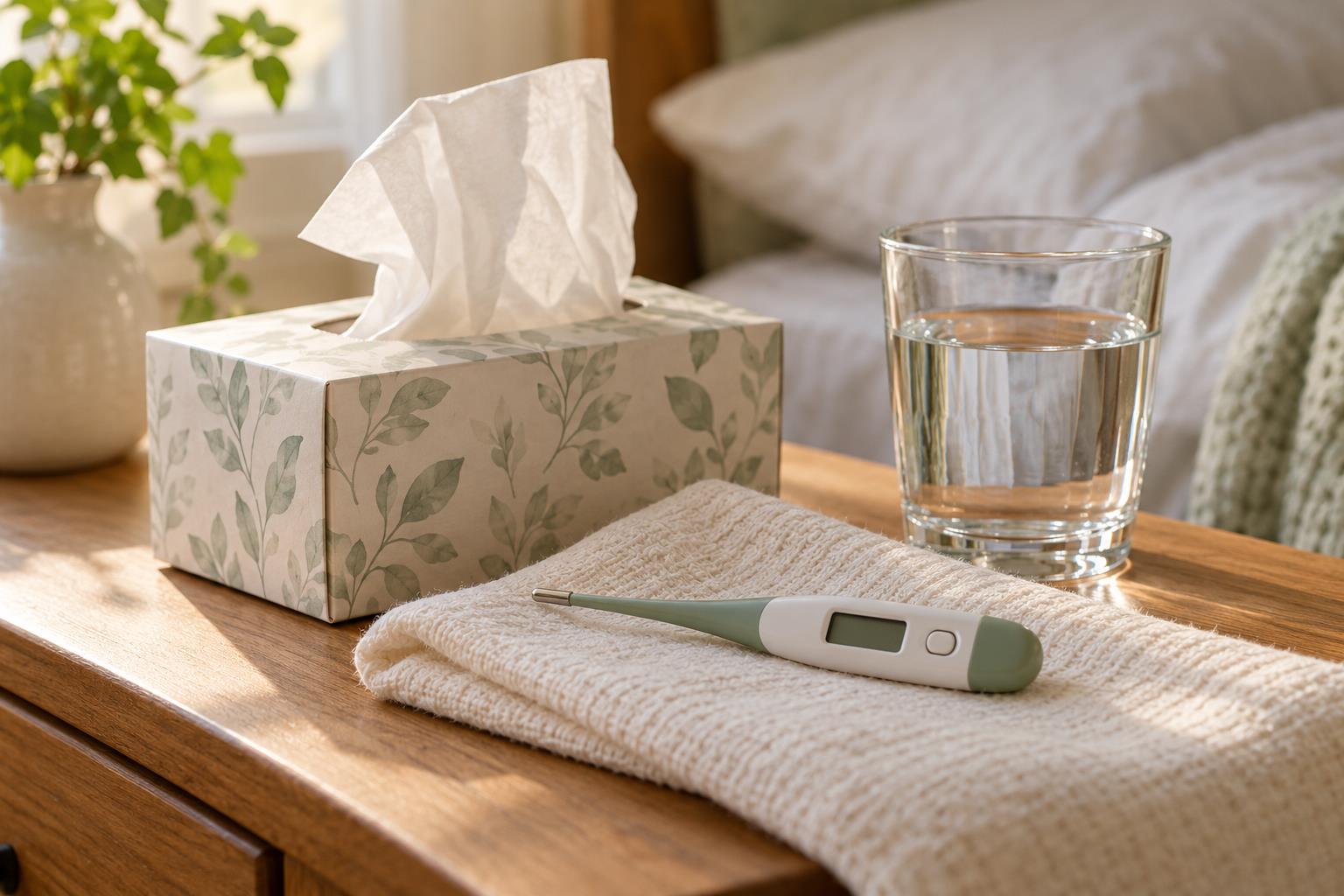
A little context: this note is for adults with mild symptoms. Pregnancy, long-term conditions, or reduced immunity can change what is safe. Ask a professional if you’re unsure.
Let’s start here
When your nose runs all day, small practical obstacles matter. Having tissues, a nearby bin, and a clear hand-cleaning route can make the next sneeze easier to manage without spreading used tissues around the room. This is general information for adults with mild symptoms. It does not establish a diagnosis, replace your own care plan, or confirm that a symptom is safe to manage at home.
A few small things to try
- Set up tissues and a bin before resting.
- Replace used tissues promptly instead of storing them.
- Wash hands after blowing your nose.
Keep the setup within reach
Place a tissue box where you actually sit, with a lined waste bin nearby. Choose a location that does not obstruct walking or put drinks next to electrical equipment. Keep spare supplies in one predictable place so a housemate can help without searching through drawers while you feel unwell.
Build the sequence
Use a tissue for coughs or sneezes, discard it promptly, and clean your hands. If you have no tissue, use your elbow. Separate the tissue area from shared snacks and utensils. The aim is a repeatable routine, not checking or disinfecting every object in the room after every sneeze.
A couple of things to skip
- Avoid leaving tissues on shared tables or pillows.
- Avoid coughing or sneezing into bare hands when possible.
When to ask for help
Get medical advice if a cough or cold is worsening, fever persists, or symptoms stop you drinking normally. Trouble breathing, persistent chest pain, severe weakness, or confusion requires urgent assessment rather than extra hygiene measures.
If symptoms are severe or rapidly worsening, use your local emergency service. A little more on getting help.
A little further reading
These links provide background and further reading. Citing an organization does not mean it endorses Wellnote or has reviewed this article. Content is AI-assisted and has not received independent clinical review. How these notes come together.
take good care of yourself. ♡