
Sleeping arrangements when a housemate has a cold
Make shared living more manageable with a considerate plan for rest and contact.
A little context: this note is for adults with mild symptoms. Pregnancy, long-term conditions, or reduced immunity can change what is safe. Ask a professional if you’re unsure.
Let’s start here
In a shared home, respiratory symptoms affect routines as well as comfort. A brief conversation about sleep, shared spaces, and practical help can reduce confusion without turning ordinary support into an exhausting set of rules. This is general information for adults with mild symptoms. It does not establish a diagnosis, replace your own care plan, or confirm that a symptom is safe to manage at home.
A few small things to try
- Agree on a resting space and shared-room routine.
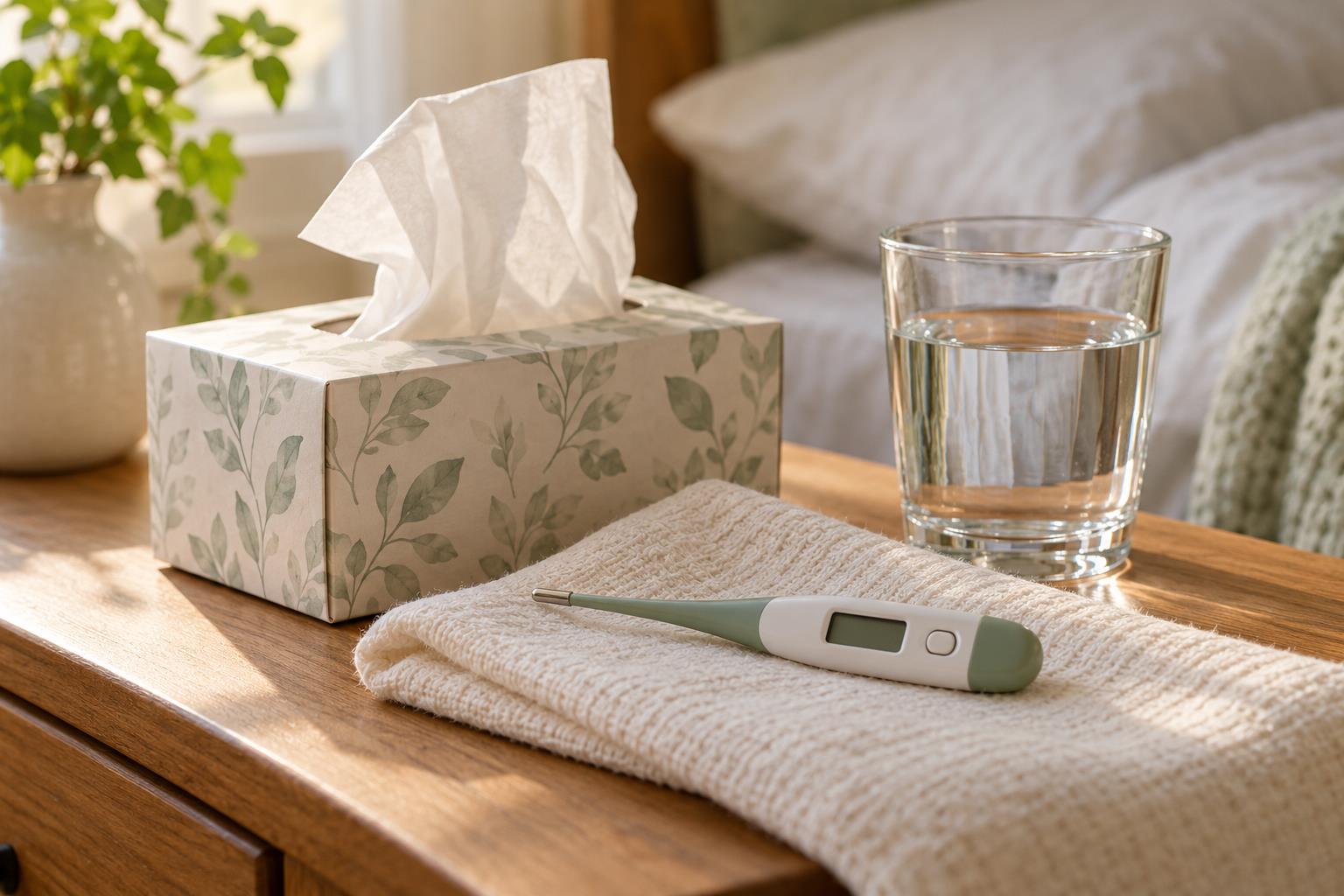
- Place tissues and a bin near the resting person.
- Check local guidance for extra respiratory precautions.
Agree on simple arrangements
If feasible, let the unwell person rest in a separate space and reduce close contact while symptoms are active. Decide how to communicate requests and where to leave drinks or meals. Keep needed items accessible so the person does not have to keep returning to a busy communal room.
Protect vulnerable housemates
Discuss whether anyone is at higher risk from respiratory illness and follow their clinician's advice where relevant. Use available precautions such as cleaner air and a well-fitted mask when appropriate. Balance ventilation with safe temperatures, security, outdoor pollution, and any known allergy triggers in the household.
A couple of things to skip
- Avoid sharing drinking containers or used tissues.
- Avoid relying on surface cleaning as the only precaution.
When to ask for help
Arrange early advice for an unwell person at high risk of complications. Emergency help is needed for serious breathing difficulty, persistent chest pain, confusion, or difficulty waking. A housemate's concern about deterioration deserves attention.
If symptoms are severe or rapidly worsening, use your local emergency service. A little more on getting help.
A little further reading
These links provide background and further reading. Citing an organization does not mean it endorses Wellnote or has reviewed this article. Content is AI-assisted and has not received independent clinical review. How these notes come together.
take good care of yourself. ♡