First care for a small kitchen nick
A shallow kitchen cut can usually be managed with basic supplies if bleeding stops and the wound is clean.
A little context: this note is for adults with mild symptoms. Pregnancy, long-term conditions, or reduced immunity can change what is safe. Ask a professional if you’re unsure.
Let’s start here
A shallow kitchen cut can usually be managed with basic supplies if bleeding stops and the wound is clean. Pause cooking before caring for it.
A few small things to try
- Stop the task and control bleeding
- Rinse the shallow wound with clean water
- Cover it before returning to safe tasks
Clean and protect the area
Wash your hands if you can, then use a clean cloth or dressing to apply steady pressure. Once bleeding has stopped, rinse the small wound with clean running water. Inspect without probing it; a deep cut, missing piece of a broken object or difficulty moving a finger needs professional assessment.
Follow-through and limits
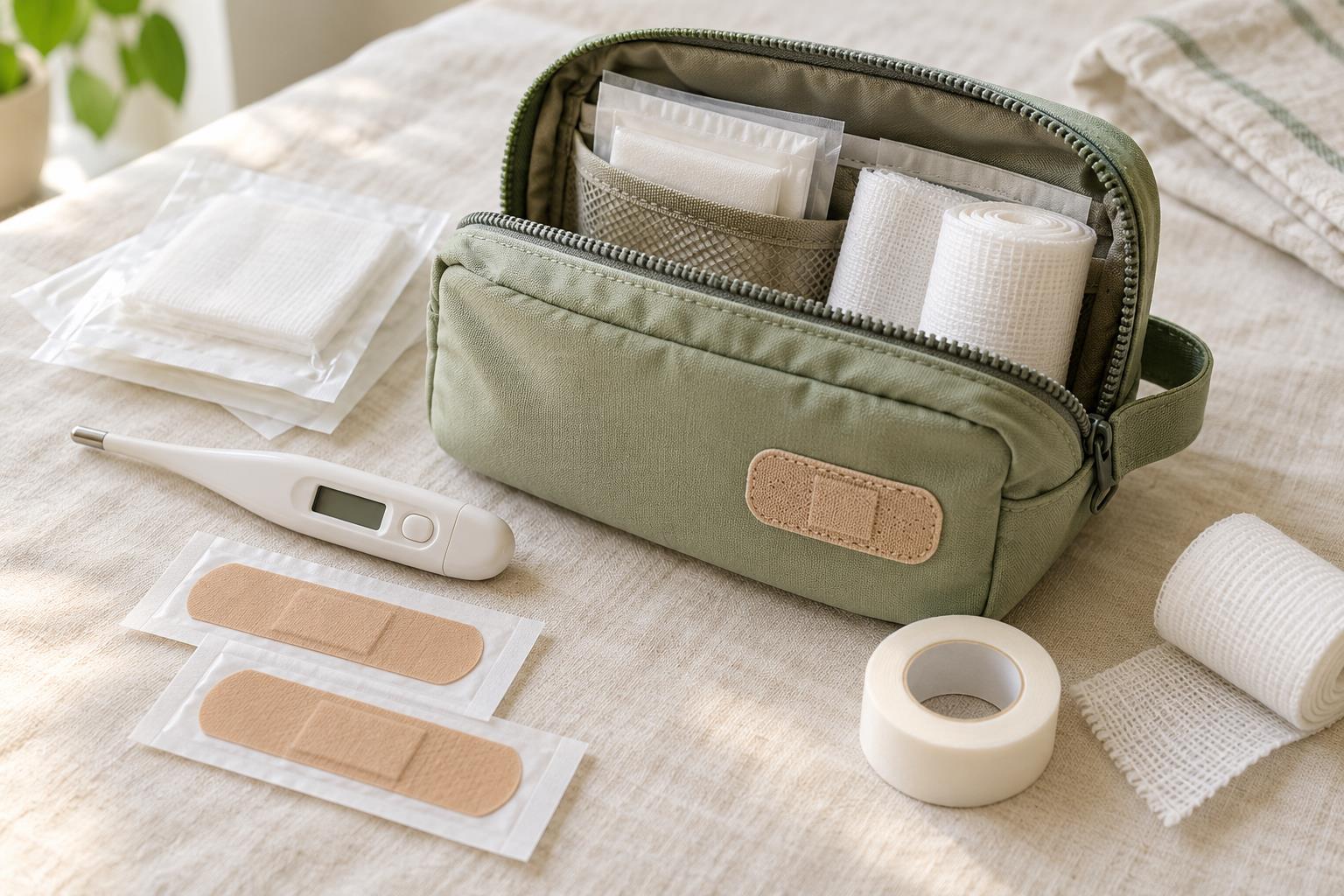
Cover the area with a clean dressing before touching food again, and follow food-handling rules where you work. A glove over a dressing may provide an additional barrier, but it does not make an actively bleeding wound suitable for food preparation. Replace protection if it becomes wet or dirty.
Home care applies only to small, shallow wounds whose bleeding stops and whose dirt can be rinsed away. Animal or human bites, punctures, contaminated wounds and uncertain tetanus protection need professional advice. Diabetes, poor circulation or immune suppression lowers the threshold for seeking care.
A couple of things to skip
- Do not pour household disinfectant, alcohol or peroxide into the wound.
- Do not pick scabs or use household glue to close a cut.
When to ask for help
Get urgent help for spreading warmth, swelling, pus, worsening pain or fever. Emergency assessment is needed for uncontrolled or spurting bleeding, a deep or gaping wound, numbness, difficulty moving, or an embedded object. Do not pull embedded glass or metal out yourself.
If symptoms are severe or rapidly worsening, use your local emergency service. A little more on getting help.
A little further reading
These links provide background and further reading. Citing an organization does not mean it endorses Wellnote or has reviewed this article. Content is AI-assisted and has not received independent clinical review. How these notes come together.
take good care of yourself. ♡