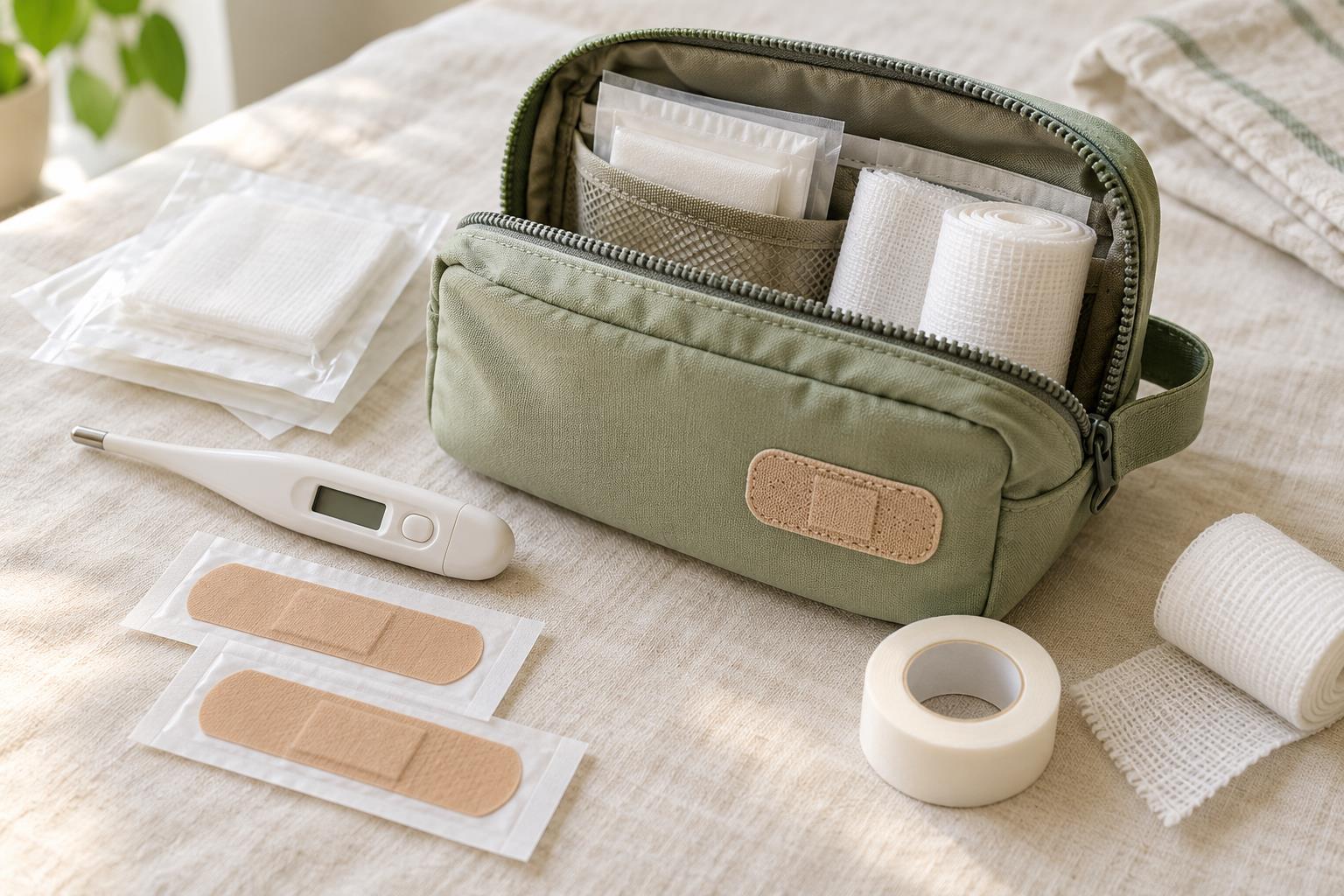
A compact kit for minor cuts away from home
A few clean supplies can make a small cut easier to manage during an ordinary outing.
A little context: this note is for adults with mild symptoms. Pregnancy, long-term conditions, or reduced immunity can change what is safe. Ask a professional if you’re unsure.
Let’s start here
A few clean supplies can make a small cut easier to manage during an ordinary outing. The kit supports first aid; it cannot replace care for serious wounds.
A few small things to try
- Pack clean sealed dressings and gauze
- Keep supplies dry and accessible
- Replace used or damaged items
Clean and protect the area
Pack sealed dressings in useful sizes, sterile gauze and disposable gloves if available. Keep the supplies dry and check that packaging is intact. Clean drinking water can be useful when a tap is unavailable, but do not delay urgent care for a deep injury while trying to assemble perfect equipment.
Follow-through and limits
Store the kit where you can reach it and replace supplies after use. Include emergency contact information and know where local urgent care is when travelling. Avoid carrying loose tablets without their labels or adding unfamiliar creams that you would not know how to use safely.
Home care applies only to small, shallow wounds whose bleeding stops and whose dirt can be rinsed away. Animal or human bites, punctures, contaminated wounds and uncertain tetanus protection need professional advice. Diabetes, poor circulation or immune suppression lowers the threshold for seeking care.
A couple of things to skip
- Do not pour household disinfectant, alcohol or peroxide into the wound.
- Do not pick scabs or use household glue to close a cut.
When to ask for help
Get urgent help for spreading warmth, swelling, pus, worsening pain or fever. Emergency assessment is needed for uncontrolled or spurting bleeding, a deep or gaping wound, numbness, difficulty moving, or an embedded object. Do not pull embedded glass or metal out yourself.
If symptoms are severe or rapidly worsening, use your local emergency service. A little more on getting help.
A little further reading
These links provide background and further reading. Citing an organization does not mean it endorses Wellnote or has reviewed this article. Content is AI-assisted and has not received independent clinical review. How these notes come together.
take good care of yourself. ♡